Over the past 20 years, this contributor has built a career helping schools, nonprofits, and community organizations create workplaces where people are treated with dignity and can actually grow — work that has reached thousands of educators, young people, and community leaders across the country. Starting from a deep belief that real change begins with human connection, they went on to found several initiatives focused on leadership, healing, and belonging, including the Equity Institute, La Cima Bilingual Leadership, and the Men's Healing Network. If you're figuring out how to turn your values into a career that makes a difference, their path shows what's possible when you lead with purpose.
Their story
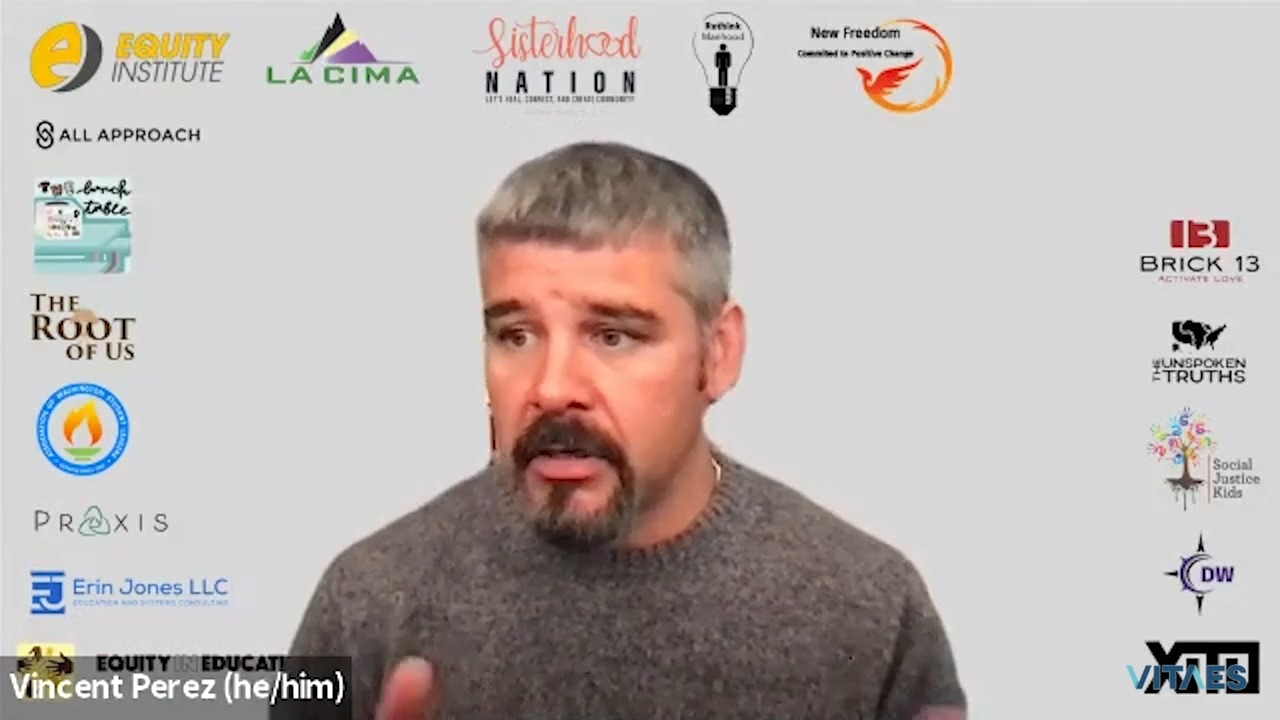
"Asking for help is a life skill" - Executive Director Non profit
16 min
Watch the full story →
Watching requires a free Vitaes account.
Key quotes
“Gratitude will get you everywhere. It was really my motivation was gratitude.”
Vincent Perez, Founder, Equity Institute
“Give me five years, drop me anywhere and I'll make success. That's what that taught me — to let go of something I was working on and just drop into something new.”
Vincent Perez, Founder, Equity Institute
“To live a life of purpose and pursue your own dreams — whatever that is — finding your passions, and the trick is to make a living off of that.”
Vincent Perez, Founder, Equity Institute
“Asking for help is a life skill set. There's a certain amount of grace I think we have to give ourselves when we feel like we're falling short or that we're not enough.”
Vincent Perez, Founder, Equity Institute
“I've never received a job in that form. I have only been hired by somebody who's recruited me.”
Vincent Perez, Founder, Equity Institute
Career highlights
Gratitude can be a career strategy — let it motivate you to show up and step up.
Vincent ran for senior class president specifically because he wanted to publicly thank his mom at graduation. That decision led to a leadership scholarship that paid for college.
When you can't find a job, build your network from the ground up — show up to every room available.
After moving to Louisiana and Wyoming where no one knew him, Vincent attended Chamber of Commerce meetings and community task forces until he built enough credibility to find work.
Seek out mentors proactively — you don't have to wait for someone to choose you.
At 17, Vincent met a teacher at a leadership camp and simply declared him his mentor in the closing circle. That man still mentors him today and now works at the Equity Institute.
A master's degree in something practical — like public administration — can open specific doors, especially for nonprofit and government contracts.
Vincent's MPA gave him the tools to navigate contracting with municipalities, counties, and school districts, which became essential to the Equity Institute's business model.
As a leader, focus on people's strengths rather than fixing every weakness — it builds better teams and better results.
Vincent described his leadership philosophy as delegating based on what people are actually good at, rather than forcing everyone into the same mold.
Give yourself grace — being hard on yourself doesn't make you better, it just makes the journey harder.
Vincent reflected that he was very hard on himself in his 20s and 30s and that learning self-compassion was one of his most important life lessons.