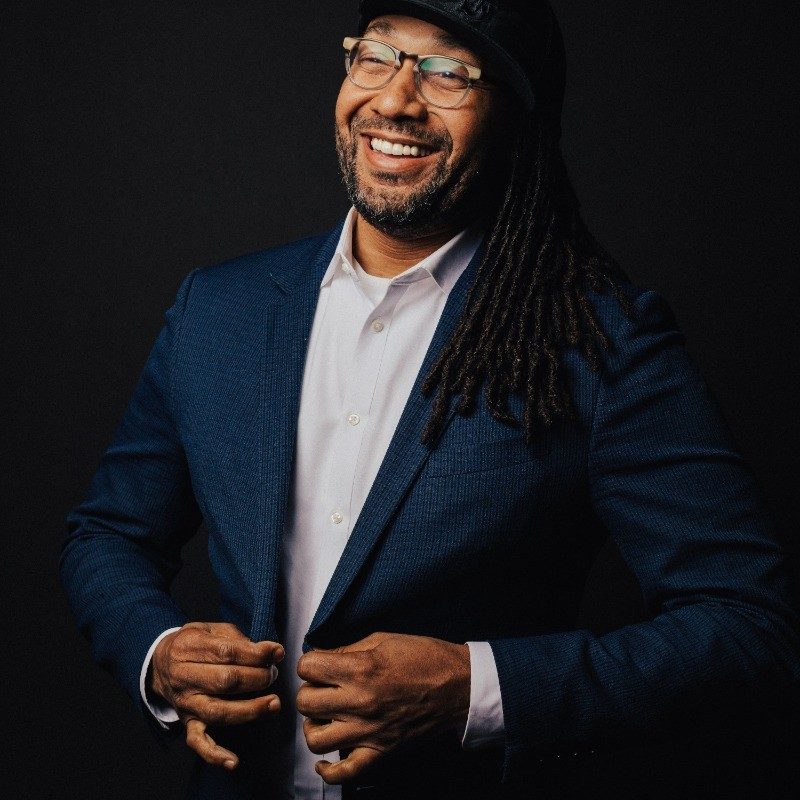
I currently serve as the Director of Equity and Strategic Engagement for the Bellevue School District (BSD), a progressive district with approximately 20,000 students and 3,000 dedicated staff members working collaboratively to educate and empower youth. This work is made possible through strong partnerships with families, communities, and various stakeholders who help bring our vision to life. While BSD boasts a graduation rate of just under 92%, we recognize that 8% of our young leaders have not been served in a way that fully equips them with the tools needed to complete high school successfully. My role is to research, analyze, and develop initiatives while coordinating strategies that ensure every student, without exception, is supported on their path to success. Under my leadership, initiatives such as BOOM and SOAR (student conferences developed to foster belonging) have empowered thousands of students of color, providing mentorship, leadership development, and academic support to drive student success. I also led the creation of key district-wide coalitions including the Black Excellence Coalition, BEAT (Bellevue Equity Action Team), PABS (Parent Alliance for Black Scholars), FAC (Family Advisory Committee), and SAC (Student Advisory Committee), all district wide initiatives to drive systemic change and advance racial equity at both the school and policy levels. Previously, I served as the Chief Operating Officer at the Urban League of Metropolitan Seattle, a not-for-profit organization with 82 years of activism and community service in Seattle’s historically Black Central District. The Urban League has long been a pillar of support, focusing on education, employment, health, and housing to uplift disenfranchised African American communities. Beyond my listed roles, I also serve as a consultant and strategist on equity-driven education initiatives, partnering with organizations to dismantle systemic barriers and foster inclusive learning environments. My work has been recognized by Education week who offered me their very prestigious, Leaders to Learn From, award in 2019, underscoring my commitment to transformative change in education and community engagement. I hold a Bachelor of Science in Mathematics from Tuskegee University and am a proud graduate of Leadership Tomorrow, Class of 2010. Specialties Include: Equity and strategic engagement | Program development | Coalition-building | Policy advocacy | Community partnerships | Leadership
Their story
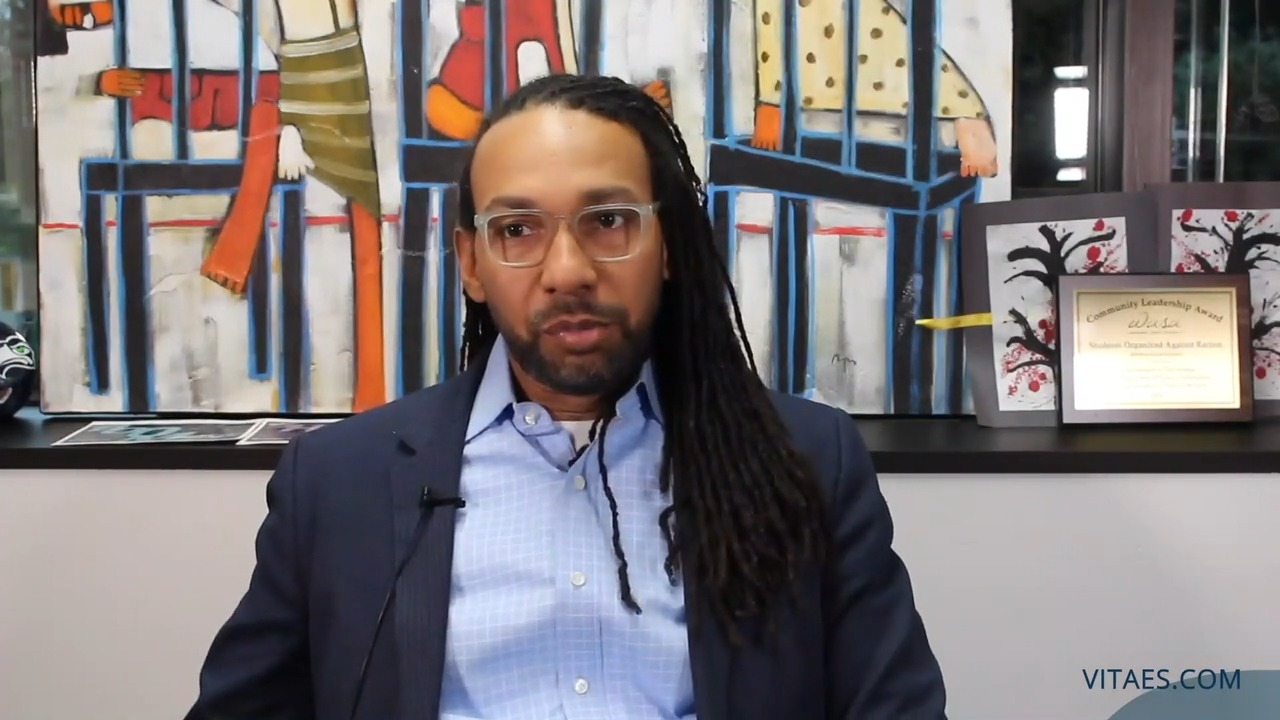
"Our society is not build for black success". Shomari Jones
20 min
Watch the full story →
Watching requires a free Vitaes account.
Key quotes
“I found that in someone right away, right away, my second day here, which is crazy.”
Shomari Jones, Director of Equity & Strategic Engagement
“From aerospace to racial equity, like, there is a massive gap in between those two experiences. But I may have had an education, but I didn't have a path at all.”
Shomari Jones, Director of Equity & Strategic Engagement
“Our current structures in our country, in our society, are not built for black success. They're not built. And when you do succeed, somebody believes you're a diversity hire, you're here to fill a quota.”
Shomari Jones, Director of Equity & Strategic Engagement
“We don't do enough of giving back. We see a lot of positions that have great potential for high earning go to those who know about the opportunity — not to the people who are left out of that conversation.”
Shomari Jones, Director of Equity & Strategic Engagement
“It is the crazy experience for someone to discover you and to help to lead you to the talents that you have and the worth and value that you can give back to communities.”
Shomari Jones, Director of Equity & Strategic Engagement
Career highlights
Your major doesn't define your career — your experiences do.
Shomari has a degree in aerospace/mathematics from Tuskegee but works in racial equity and education. He says the foundation of your major is 'completely outweighed by the experiences that you're afforded.'
Say yes to opportunities that don't fit your plan — they might reveal what you're actually meant to do.
Shomari had no career plan when he landed in Seattle. Someone he met at a church breakfast two days after arriving offered him a job at UW that launched his entire career in youth and equity work.
Working inside a system gives you more power to change it than working outside it.
Shomari contrasted his earlier nonprofit roles with his current position inside the school district, noting that being at the table with decision-makers lets him bring perspectives that 'may not otherwise be at the table.'
Equity work is slow, political, and hard — go in with realistic expectations.
He talked about how unlike the private sector, you can't just 'wave a wand' and change a school district in six months. Money, existing laws, and old-guard practices slow everything down, and that's something to prepare for emotionally.
Mentorship isn't optional — seek it out and then pay it forward.
Shomari credits mentors at every stage of his journey for helping him discover his talents. He now urges others to be mentors to young people and to actively open doors for those who aren't in the room.
Being a person of color in a leadership role can mean facing racism from inside your own organization — and you'll have to decide how to respond.
Shomari spoke candidly about experiencing race-based bias at work, navigating HR conversations, and the tension between defending his humanity and being strategic about how he shows up in professional spaces.