
The Honorable Richard A. Jones is a Senior United States District Judge for the Western District of Washington, serving on the federal bench in Seattle. Appointed by President George W. Bush in 2007, Judge Jones has presided over a wide range of significant federal civil and criminal matters throughout his distinguished judicial career. Before joining the federal judiciary, Judge Jones served as a judge on the King County Superior Court and spent many years in public service as both a prosecutor and legal leader in Washington State. Widely respected for his professionalism, fairness, and commitment to justice, he has built a reputation as a thoughtful and highly regarded member of the legal community. Judge Jones has also been active in mentoring and civic engagement efforts, supporting the development of future legal professionals and contributing to the broader Seattle community through leadership and public service.
Their story
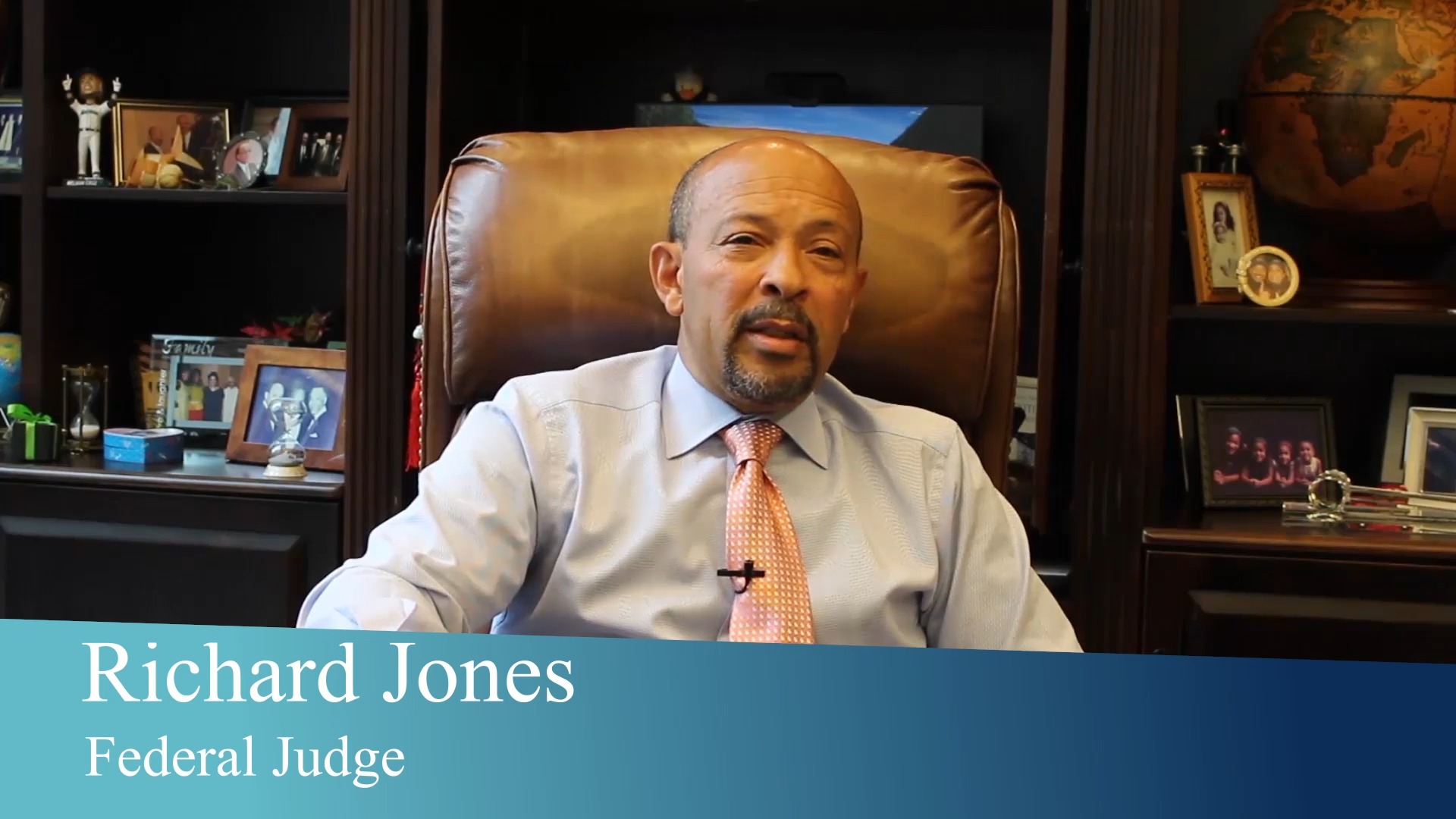
Senior United States Federal Court Judge
26 min
Watch the full story →
Watching requires a free Vitaes account.
Key quotes
“Lucky implies I didn't do anything. Lucky implies something was given to me. Lucky implies that I was handed something I did not earn, that I did not work for and I didn't work hard for. I am not lucky. You know what I am? I am smart. I am talented. I take advantage of the opportunities that come my way, and I work really, really hard. Don't call me lucky.”
Judge Richard A. Jones
“In the morning I'm sending people to prison and the afternoon I'm trying to help save people's lives and help them get over, overcome their addiction.”
Judge Richard A. Jones
“The senior partners aren't sure how our clients will react to having a black lawyer represent them. So we're not going to extend an offer to you, but please don't take it personal, because it's got nothing to do with your qualifications.”
Judge Richard A. Jones, recounting words said to him by a lawyer at a law firm lunch
“God gave you two ears for one reason, so you listen twice as much as you talk. A lot of people don't understand that.”
Judge Richard A. Jones
“I just knew that I didn't want to be broke anymore. I was tired of being poor.”
Judge Richard A. Jones
Career highlights
You have to go to college, do well, then complete three years of law school — there are no shortcuts to becoming a judge.
Judge Jones is direct that strong academic performance in undergrad and law school is the foundation of any legal career, and judges are evaluated on that record their entire careers.
Focus hard on your writing — it's how lawyers and judges communicate, persuade, and get taken seriously.
He lists writing as one of the top skills to develop, saying you need to be able to articulate ideas clearly so people understand you, whether in a brief, a ruling, or an argument.
Build as wide a range of experience as possible before the bench — trial experience especially earns respect in the courtroom.
Judge Jones worked as a prosecutor, a corporate litigator, and a federal prosecutor before becoming a judge. He says lawyers respect judges who have actually fought tough cases themselves.
Don't let people who underestimate you set your ceiling — use their doubt as fuel.
A law professor told him he didn't have what it took to be a lawyer. A friend said he had 'a snowball's chance in hell' of becoming a federal judge. He proved both of them wrong and made sure they knew it.
Learn to communicate with everyone — not just people who look or live like you. That skill is what makes a great judge.
He describes needing to make a homeless repeat offender and the CEO of a major company both feel heard and treated fairly — and says that art of communication is something you build deliberately.
Once you've been given opportunity and education, you have a duty to reach back and help others — it's not optional.
From his first year of law school, neighbors came to him for help. He frames giving back as a responsibility that comes with being educated, not a nice extra.