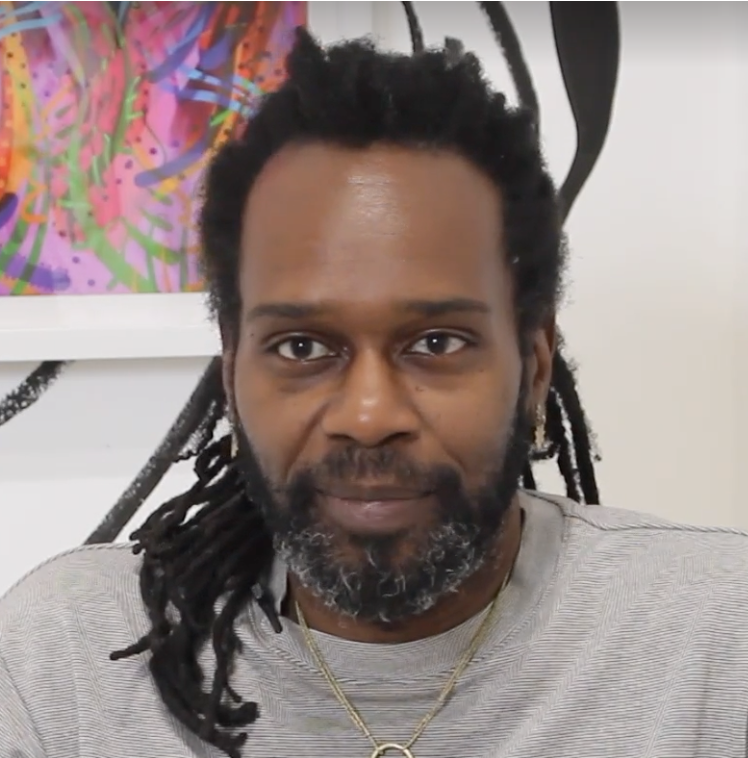
Moses Sun is a Seattle-based multidisciplinary artist, curator, and creative visionary whose work explores identity, movement, memory, and the Black diasporic experience through vibrant abstract expression. Working across painting, photography, digital media, murals, sculpture, and immersive installations, Sun blends influences from hip-hop, jazz, Afrofuturism, and his Southern upbringing to create emotionally powerful works that celebrate humanity, culture, and connection. () Recognized as one of Seattle’s emerging artistic voices, Sun gained broad attention for his contribution to Seattle’s Black Lives Matter street mural and has since exhibited work in galleries and institutions across Seattle, Los Angeles, New York, and Toronto. His work often examines healing, community, and transformation while encouraging viewers to reflect on possibility, resilience, and the evolving Black experience. () Beyond his studio practice, Sun is deeply engaged in public art, curation, and mentorship, helping shape conversations around representation, creativity, and cultural storytelling within Seattle’s arts community. ()
Their story
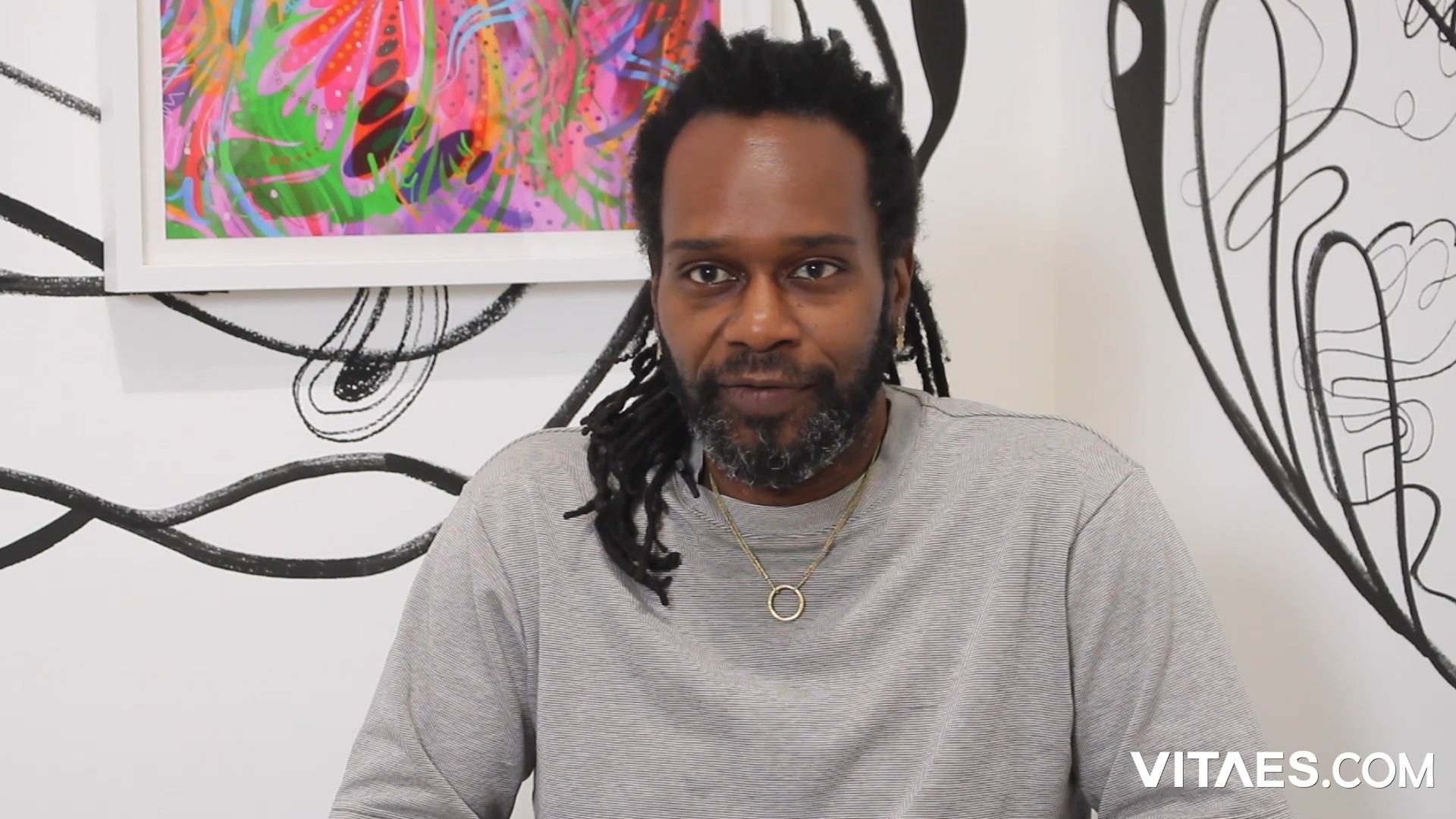
Digital, analog and mixed media artist
27 min
Watch the full story →
Watching requires a free Vitaes account.
Key quotes
“I tend to call myself an all time artist because if I was a full time artist, I'd be working for someone else. And what I mean by all time is that I'm constantly in that creative mind space.”
Moses Sun, Artist
“Galleries are high end consignment shops. To be blunt, they earn a commission if it's sold, but they have to do the work to promote it. And on average, most galleries take 50%.”
Moses Sun, Artist
“I'm just a vessel. So when I say meditation, it's like I'm meditating, but I'm also communing with my ancestors, with the people I know, my elders, with all the conversations I have.”
Moses Sun, Artist
“I've been welcomed in and pushed out, and it took me a long time to see the pattern. And I always thought it was me.”
Moses Sun, Artist
“Living my purpose, it's like, allows me to be expansive and limitless. I get to be curious versus a path that I've been instructed to take.”
Moses Sun, Artist
Career highlights
Treat every job as a chance to learn, not just earn — approach corporate work like school.
Moses worked at Disney and other major companies and said, 'I approached everything as like school. And because I had that mindset, I wasn't worried about climbing the ladder. I wasn't playing politics.'
Build multiple income streams as an artist — a gallery is just one platform, not your whole career.
Moses explained that galleries take 50% commission and are essentially 'high-end consignment shops.' He emphasized that having a gallery is 'literally one stream of income. It's a platform.'
Protect your energy and stop pouring into people who haven't asked for your help.
Moses reflected on a pattern of over-investing in others: 'I would get so engaged in cultivating and supporting other people... I thought that was living a virtuous, unselfish life. Well, one part of that might be, but the part I left out was me.'
When you get a mentor, you have to put in the work — make the call, ask the questions, show up.
Having mentored many people himself, Moses said clearly: 'The mentee has to make an effort. The mentee has to make the call. If you don't hear from me, make the call.'
Rest is part of the work — ignoring it will shut you down whether you want it to or not.
Moses shared that every time he overextended himself, 'my body just shuts everything down for two weeks.' He learned that rest is not optional for a sustainable creative practice.
Name what you do on your own terms — your identity as a creative is yours to define.
Moses coined the phrase 'corporate creative' to describe designers and artists working inside companies, noting it reframed how people saw themselves: 'I said that to a designer at a design conference, and I could tell she was like, I've never thought of it that way.'