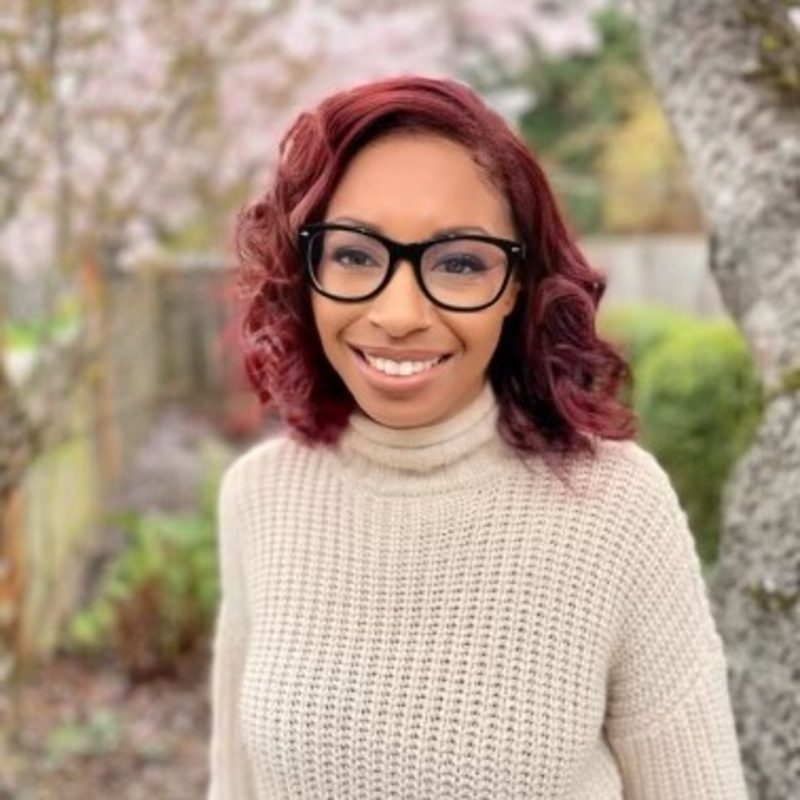
Kalila Griffin is a Licensed Marriage and Family Therapist (LMFT) based in Seattle who has built her career supporting communities of color across schools, nonprofits, and counseling settings. She holds a Master's degree in Marriage and Family Counseling from Antioch University Seattle, with a focus on sex therapy and education, and has spent years working as a therapist, outreach specialist, and academic support staff at elementary through college levels. If you're interested in mental health, social work, or community advocacy, Kalila's path shows how those passions can grow into a meaningful, multifaceted career.
Their story

I love connecting with people and hear their stories. Family Thereapist
9 min
Watch the full story →
Watching requires a free Vitaes account.
Key quotes
“I really love being able to connect with people and hear their story. A lot of being a therapist is listening. You're trying to understand this other person and their life, their worldview and the issues that they have.”
Kalila Griffin, LMFT
“Being a therapist, actually it's evidence based that the role of the therapist or like who the therapist is and the relationship is actually more important than the actual theory or interventions that you use.”
Kalila Griffin, LMFT
“There are not a lot of black therapists, let alone black sex educators, let alone black sex therapist. And so in my program as well, it's like, I would be in a classroom. It's just me.”
Kalila Griffin, LMFT
“I've taken out tons of loans to do this program. This is not like — I mean, I got some scholarships because I did that work, but it's a very expensive program to go through.”
Kalila Griffin, LMFT
“I realized being a teacher was actually not the role that I wanted. I really want to work with young people to help them heal and work through these different kind of traumas.”
Kalila Griffin, LMFT
Career highlights
Your undergrad major doesn't have to match your career — your experiences and what moves you do.
Kalila majored in English, considered teaching and law school, and pivoted to therapy after working in schools and witnessing how trauma was affecting kids' ability to learn.
Research graduate programs carefully — specializations matter and not all programs are the same.
Kalila highlights that Antioch University Seattle is the only program she knows of that offers a sex therapy and sex education focus, which matched her specific career interests.
Know the real financial path: expect low or no pay as an intern, but earning potential grows significantly with experience and private practice.
Kalila was earning zero dollars as an intern but explained that therapists in private practice can set their own rates — sometimes $150 per session — and can reach six figures.
The therapeutic relationship — who you are as a person — matters more than the theory you use.
Kalila cites evidence that the connection between therapist and client is actually more predictive of outcomes than the specific interventions used, which validates why diverse therapists are so needed.
Be honest with yourself about the barriers in this field, including cost and racial underrepresentation, so you can plan and advocate accordingly.
Kalila openly discussed how expensive grad school is, how she noticed many classmates had inherited wealth or affluent spouses, and how she was often the only Black person in the room.
Your presence in a predominantly white field is not just personal — it's political and it's needed.
Kalila noted that Black therapists, and especially Black sex therapists and educators, are extremely rare, making her path both challenging and critically important for communities of color.