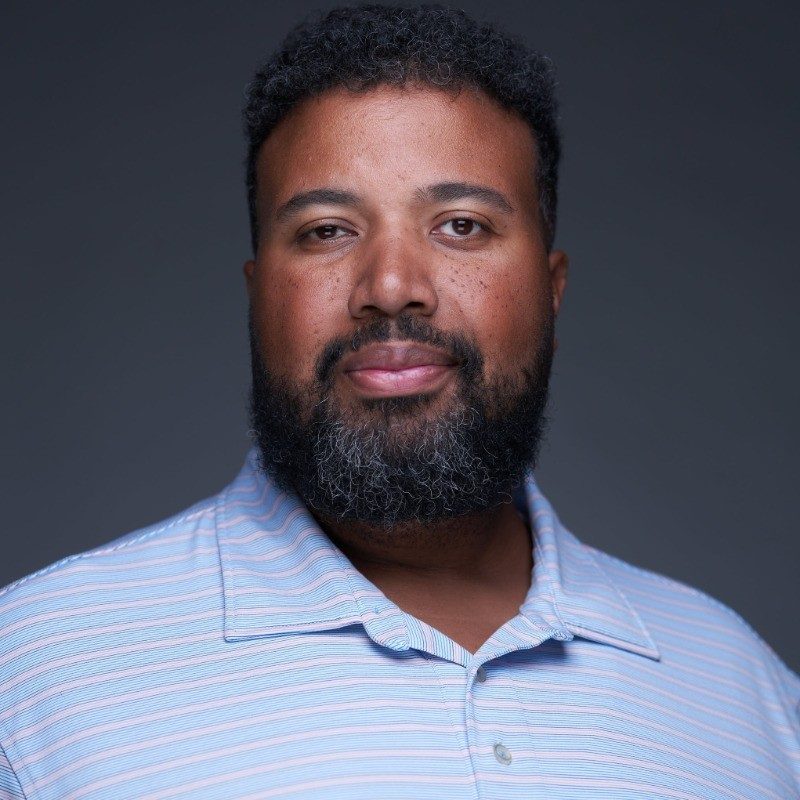
Chris Baudin is a software engineer and cloud solutions expert who has built his career designing the kind of tech systems that power modern businesses — from cloud platforms on Microsoft Azure to scalable applications built with tools like Docker and Kubernetes. He got here by combining deep technical skills with a real focus on understanding people's needs, which is a reminder that in tech, knowing how to listen matters just as much as knowing how to code. Chris is passionate about mentoring the next generation of engineers and believes that great teams grow when everyone has the chance to learn, contribute, and succeed.
Their story
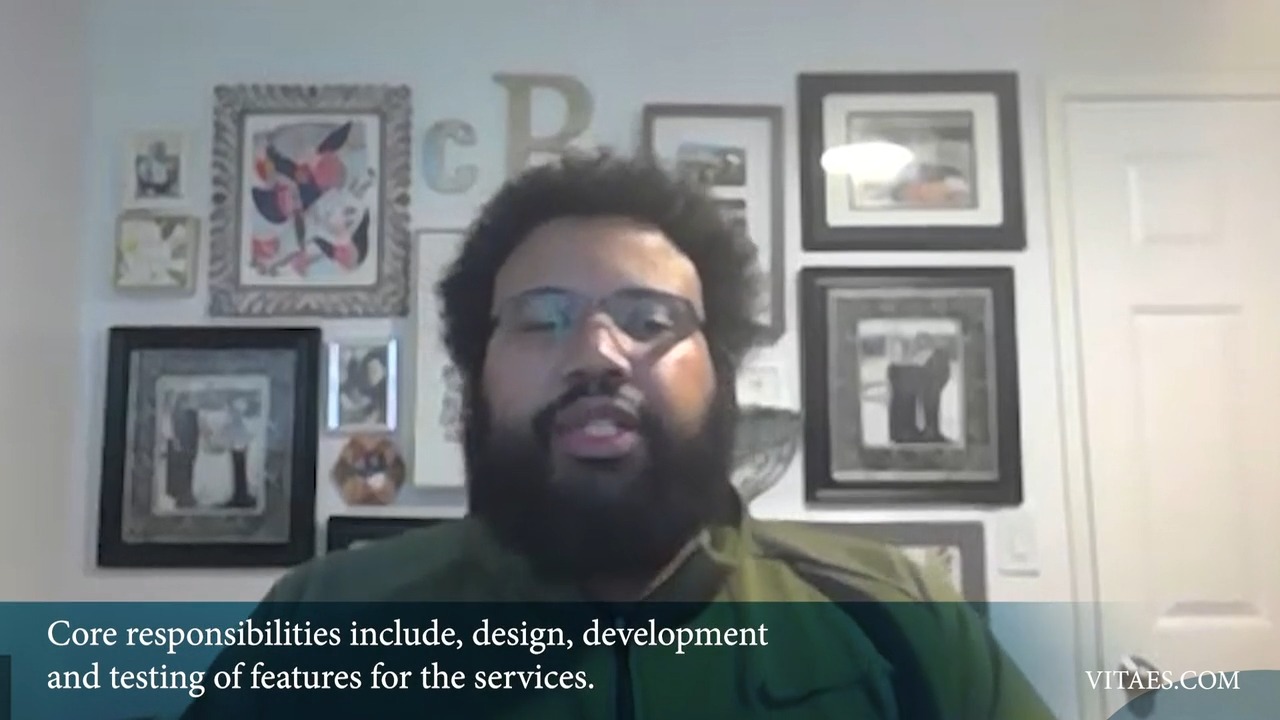
Look beyond salary. Bonuses, stock, and benefits are key parts of total compensation.
18 min
Watch the full story →
Watching requires a free Vitaes account.
Key quotes
“From when I was younger, I loved writing code. Just that exercise of getting a machine to crunch through a problem and provide the answer is something that's really satisfying for me personally.”
Chris Baudin, Senior Software Engineer
“I'm a first generation Haitian American, grew up in Florida. One of the big influences in my life that led me to this career was my uncle, who did some work in computer engineering and that sparked my interest in computers in general.”
Chris Baudin, Senior Software Engineer
“If you want to jump from company to company, that's one way to get new experiences. But within a big company, if it's a Microsoft, Facebook, Google, Apple — a lot of those companies just have so many different products in their portfolio. When you're ready for something new, there likely is a product available that you can work on.”
Chris Baudin, Senior Software Engineer
“The isolation of being in an environment where you're the only person with dark skin — it's not necessarily a direct attack against me personally, but it really does have an impact.”
Chris Baudin, Senior Software Engineer
“If you don't know the next step, that could just lead to long-term issues down the road. Helping to get people to be aware of what success looks like and what comes after it — that's one of the things I think would mitigate that type of discrimination.”
Chris Baudin, Senior Software Engineer
Career highlights
Start coding now — pick any language and find free problem sets online to see if you actually enjoy it before committing to a degree.
Chris recommends Python, Java, or C# and points to websites with sample coding problems as a low-stakes way to test whether programming clicks for you personally.
A four-year degree is solid, but it's not the only path — know what your goals are before deciding how much education you need.
Chris explains that self-taught coders or two-year degree holders can land jobs at some companies, while master's or PhD programs make more sense for research-heavy fields like machine learning or computer vision.
Explore as many corners of tech as you can early on — cloud, mobile, AI, embedded systems — so you can figure out if you're a generalist or a deep specialist.
Chris has worked across mixed reality, client apps, and cloud services at Microsoft and says the engineers he's seen thrive long-term either master breadth or go extremely deep in one passionate area.
Understand what total compensation actually means — your base salary is just one piece; bonuses and stock can make up a huge portion of what you earn.
Chris walks through how senior engineers at his level earn $200K–$300K per year when you combine salary, annual cash bonuses, and stock that vests over three to five years.
Job shadowing — even when it shows you what you don't want — is valuable. Use it to get real information, not just inspiration.
Chris's high school job shadow placed him in an IT customer support role. He realized immediately it wasn't for him, and that clarity helped him navigate toward software engineering with purpose.
If you don't see leaders who look like you in tech, know that people are working to change that — and your presence in the industry is part of the solution.
Chris speaks openly about the quiet weight of being the only dark-skinned person in the room and why he mentors and shares his story, so the next generation doesn't have to figure it out alone.