
With over 25 years in the tech industry, this contributor has built a career that spans engineering, marketing, and product leadership — proving there's more than one path to the top. Today, they lead a team of product managers at HP, shaping the future of AI-powered software for everyday devices like PCs, phones, and wearables. They're passionate about building diverse teams where people with different backgrounds can thrive, and they bring that same energy to mentoring the next generation.
Their story
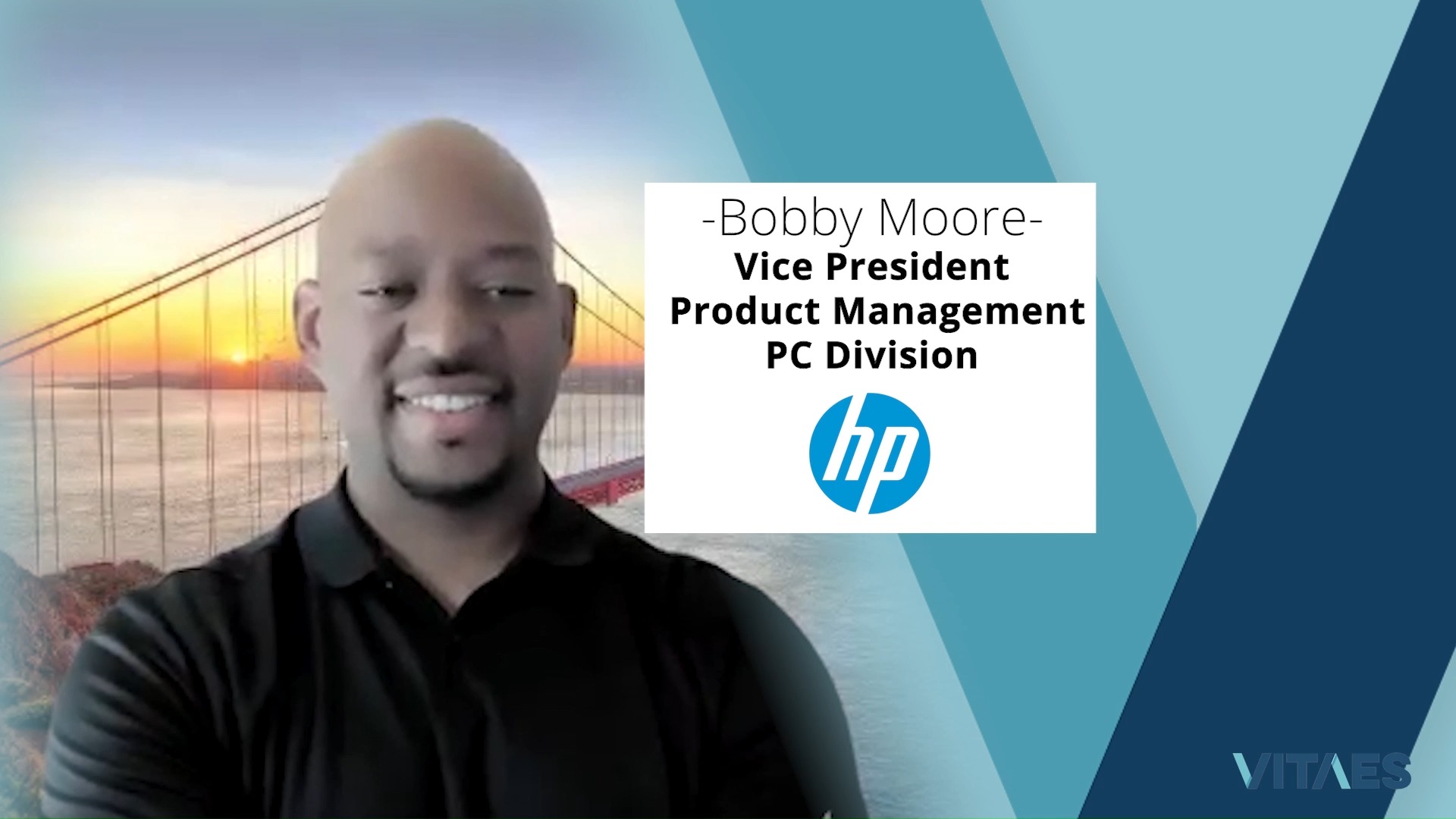
20+ years working in Tech as a Senior Leader
36 min
Watch the full story →
Watching requires a free Vitaes account.
Key quotes
“You don't have to be the smartest person in the room to have these opportunities. You kind of figure things out as you go along, and you stay committed to the process because there is a process that eventually gets you to where you want to go.”
Bobby Moore, Product Management Leader, HP
“When you find that right job that's perfect for you, that has the perfect manager, that has the perfect amount of clarity, you just are three times more productive than if you're missing any of those things.”
Bobby Moore, Product Management Leader, HP
“Being a person of color, you experience areas where there's someone who has bias. I have a short memory for that, to be honest, because I don't always find it to be productive to dwell on it.”
Bobby Moore, Product Management Leader, HP
“I came into the workforce making around $60,000, which was more than my parents had ever made. So I immediately came out of my first job making more than what my parents made.”
Bobby Moore, Product Management Leader, HP
“What really is important is to have a technical aptitude, to have a growth mindset, to be conditioned to want to learn new things and have the ability to learn new things quickly, to be agile.”
Bobby Moore, Product Management Leader, HP
Career highlights
Find someone who's already doing what you want to do and ask them everything — interview questions, how they got in, what the job is really like.
Bobby described how, when Microsoft was on his radar, he tracked down interns and peppered them with questions about the process. He credits this habit as a core reason he got in and kept advancing.
You don't need to be an engineer or know how to code to work in tech — curiosity and the ability to learn fast matter more.
Bobby said HP and Microsoft both hire non-engineers into product management roles. He emphasized technical aptitude and a growth mindset over specific credentials.
Understand your total compensation — base salary is just one piece. Bonuses and stock can more than double what you actually take home.
Bobby broke down his own compensation transparently, explaining how a $60K starting salary could grow significantly once you factor in a 10% annual bonus and stock that vests over four years.
Be aware of the subtle bias of being 'coddled' — where managers protect you from hard assignments instead of giving you the challenges that actually grow your career.
Bobby reflected on his time at Microsoft and how, as a Black engineer, he sometimes felt steered away from difficult roles that carried risk — but those hard roles are exactly what builds leadership.
Before you go back for an MBA or grad school, explore whether a lateral move within your company could get you the same experience for free.
Bobby was accepted to Georgia Tech and ready to leave Microsoft for an MBA, but a mentor pushed him to first look for a business-side role internally. He got one — and never left.
Protect your mental space — block time on your calendar, take walks, and don't run yourself into burnout. Your productivity depends on it.
Bobby talked about working remote in Seattle and intentionally blocking 40% of his day away from meetings — including walking his dog — to stay sharp and avoid the kind of stress that makes you unproductive even when you're at your desk.